Weiß, Tinte, Gold
White, Ink, Gold
Weißes Blatt, Schellacktinte, Blattgold. Über die Sequenz, die meinen Papierarbeiten zugrundeliegt.
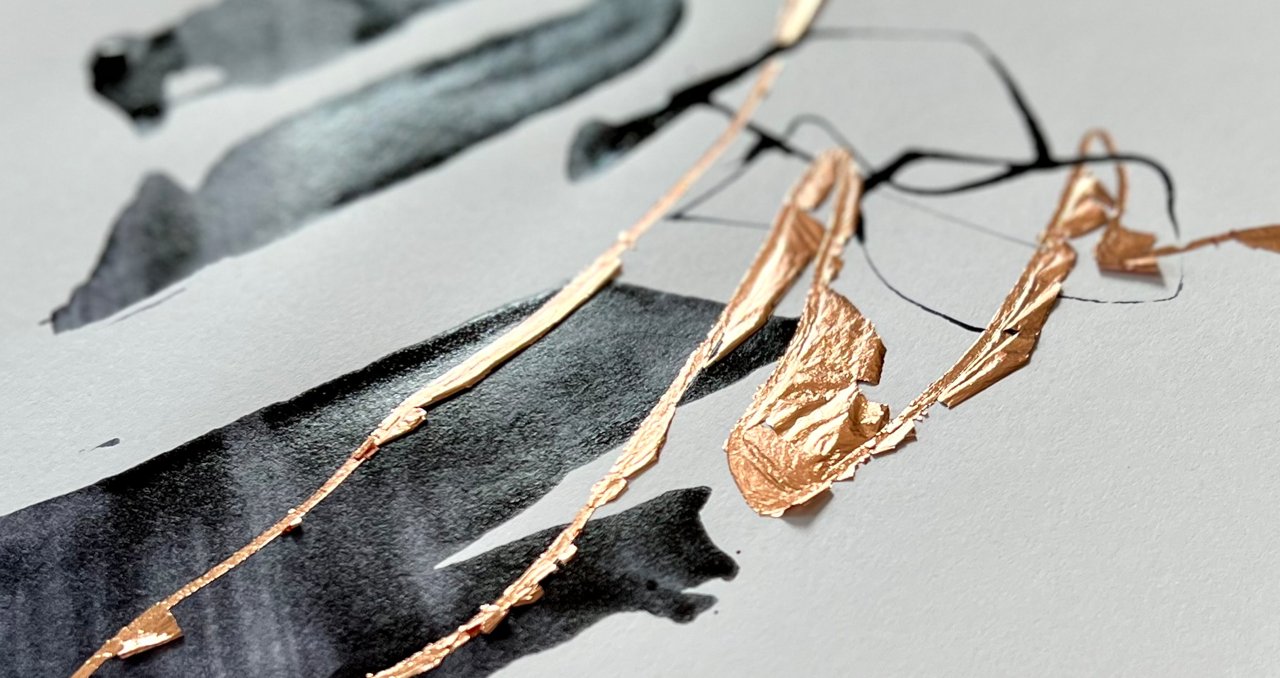
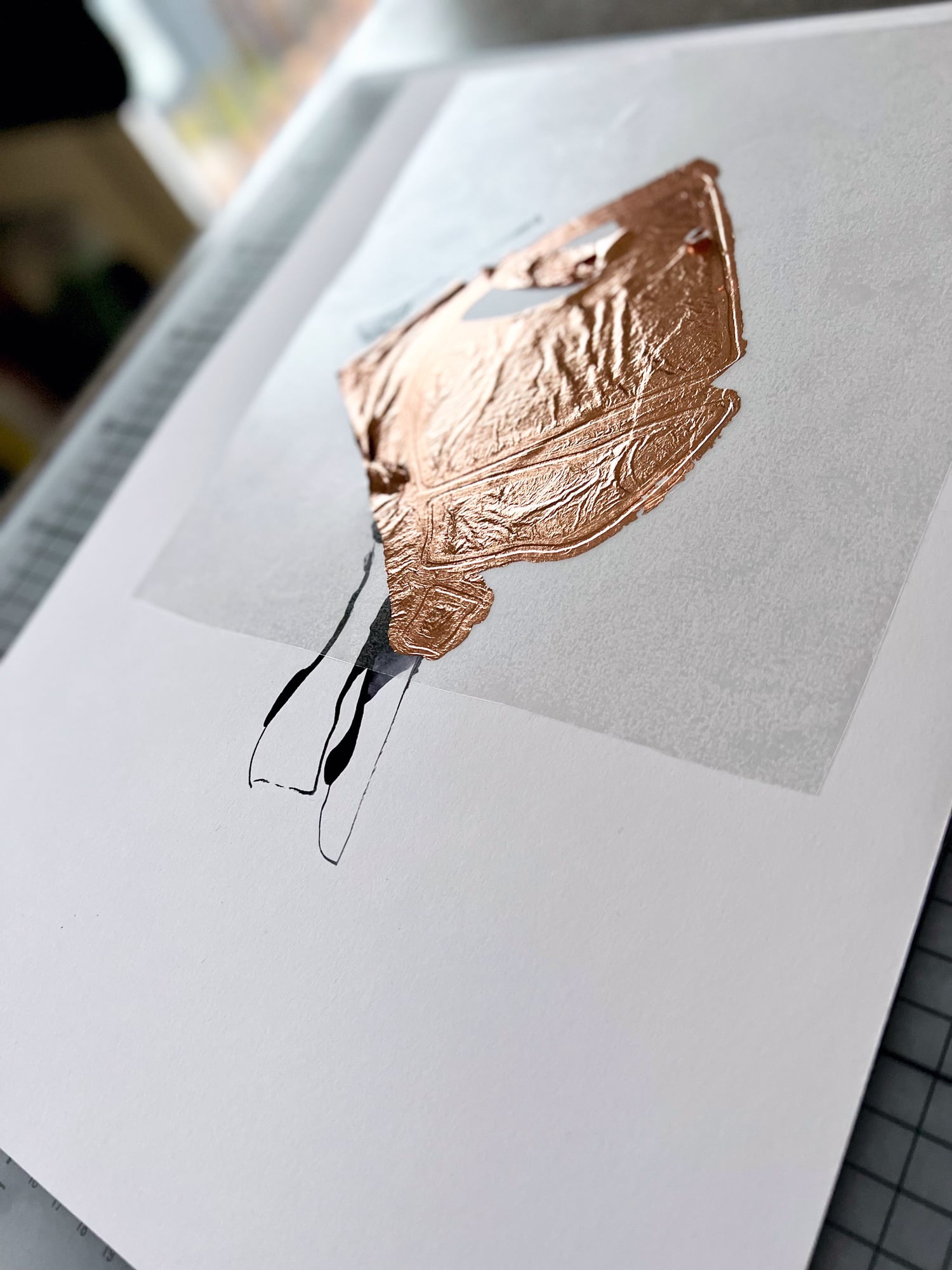
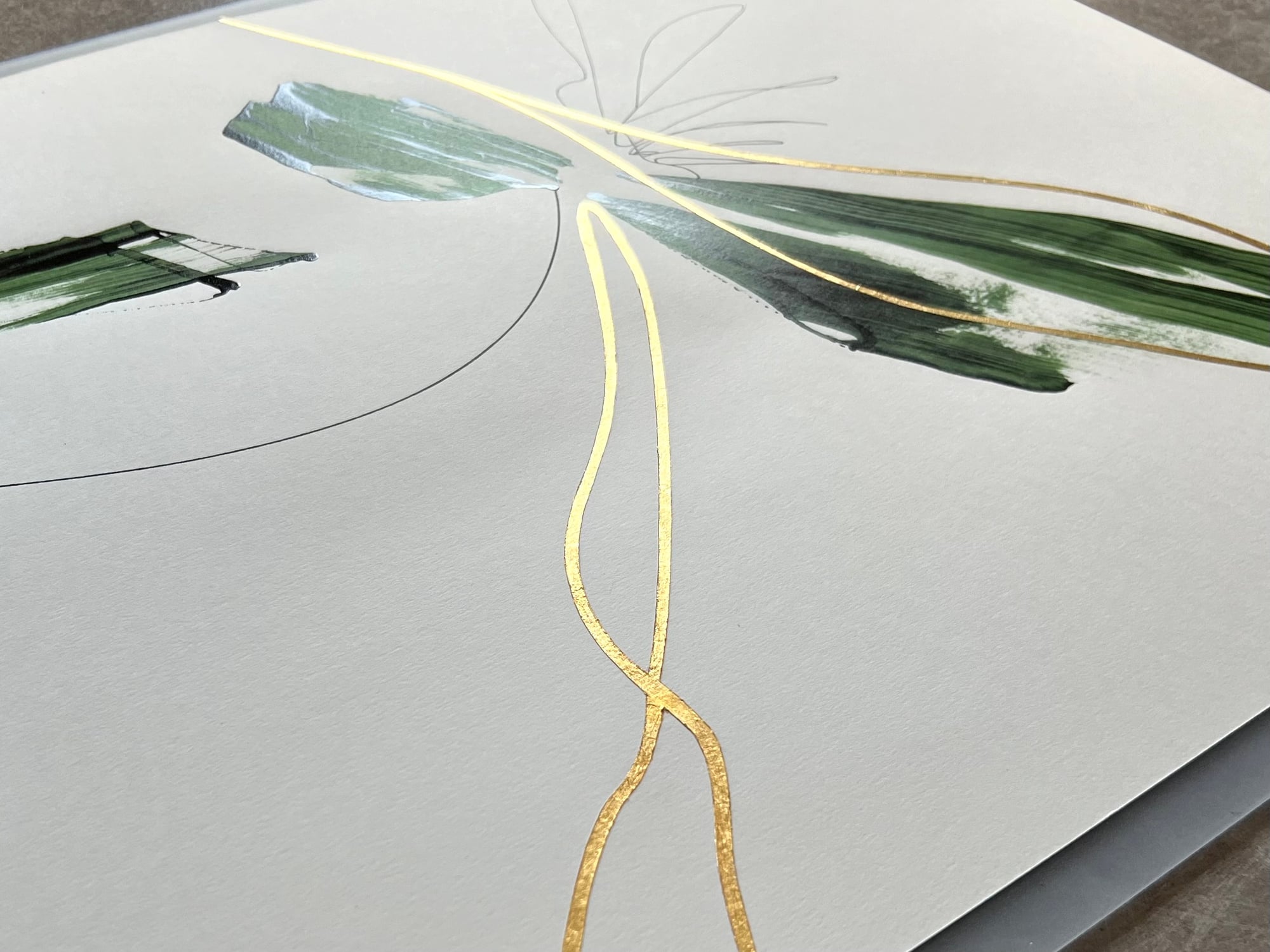
Die Papierarbeiten folgen einer festen Sequenz: weißes Blatt, Tinte, Blattmetall. Drei Systeme, die einander widersprechen.
Das Weiß ist kein leerer Grund, sondern eine Bedingung. Die Tinte bricht ein – gestisch, körperlich, irreversibel. Was sie hinterlässt, lässt sich nicht rückgängig machen. Das Blattgold reagiert darauf, aber nicht als Zierde und nicht als Versöhnung. Hunderte Entwürfe gehen ihm voraus. Die Goldanlage selbst kennt zwei Wege: das Maskieren der gesamten Fläche und das haarfeine Freilegen der Linien mit dem Skalpell – oder das freihändige Auftragen der Anlage mit einem kleinen Pinsel. Beide führen über einen Akt höchster Präzision zum selben Ergebnis. Was als gestischer Einbruch begonnen hat, wird in ein neues Gleichgewicht überführt – in eines, das ohne den Bruch nicht möglich, nicht nötig und vielleicht gar nicht denkbar gewesen wäre.
Ausgangspunkt für alle Papierarbeiten dieser Technik ist ein Sonett von Marie Luise Kaschnitz: Eines Tages, geschrieben in der Nachkriegszeit. Es beginnt mit dem Bild des Gartens – dem Ort des Kultivierten, des Gehegten, des Unbefleckten – und stellt fest, dass kein Garten weit genug abgelegen ist, um vor dem „wilden Schrei der Welt" sicher zu sein. In der dritten Strophe: Ein wölfisch Wesen springt aus Lammesmienen. Und am Ende: Und weil er lebt, muss er dem Chaos dienen / Und einem Neuen, das die Zeit erweckte, / Und dessen Sinn und Ende niemand kennt. Ulrich Greiner hat das Gedicht in der Frankfurter Anthologie „ein schönes Gedicht, ein schreckliches Gedicht" genannt: schön die beherrschte Form, schrecklich der Befund.
Die Arbeiten illustrieren dieses Gedicht nicht – sie antworten ihm. Das Gold nimmt das Chaos nicht zurück. Es setzt ein neues Gleichgewicht, in dem die Störung eingehegt wird und enthalten bleibt. Aber dieses Gleichgewicht ist ein Zustand, kein Ende. Die Sequenz kann von vorn beginnen; in das Bild kann erneut Chaos einbrechen. Was der Text als offenen, schrecklichen Befund stehen lässt, beantwortet die Arbeit mit einer Geste, von der offenbleibt, ob sie hält, die aber zeigt, dass eine Antwort möglich ist.
The paper works follow a fixed sequence: white sheet, ink, metal leaf. Three systems that contradict one another.
The white is not an empty ground but a condition. The ink breaks in – gestural, physical, irreversible. What it leaves behind cannot be undone. The gold leaf responds to this, but not as adornment and not as reconciliation. Hundreds of studies precede it. The gilding itself follows one of two paths: masking the entire surface and exposing the lines with a scalpel, hair-fine – or applying the gilding size freehand with a small brush. Both arrive, through an act of extreme precision, at the same result. What began as a gestural rupture is brought into a new equilibrium – one that without the rupture would not have been possible, not necessary, perhaps not even thinkable.
The point of departure for all paper works in this technique is a sonnet by Marie Luise Kaschnitz: Eines Tages, written in the post-war years. It opens with the image of the garden – the place of the cultivated, the tended, the unblemished – and finds that no garden lies remote enough to be safe from the "wild cry of the world." In the third stanza: a wolfish creature springs from lamb-like features. And at the close: because he lives, he must serve chaos / and a new thing the age has woken, / whose sense and end no one knows. In the Frankfurter Anthologie, Ulrich Greiner called it "a beautiful poem, a terrible poem": beautiful in its controlled form, terrible in its verdict.
The works do not illustrate this poem – they answer it. The gold does not take back the chaos. It sets a new equilibrium in which the disturbance is contained and held. But this equilibrium is a state, not an end. The sequence can begin again; chaos can break into the image once more. What the poem leaves standing as an open, terrible verdict, the work answers with a gesture of which it remains uncertain whether it holds, but which shows that an answer is possible.